Flotration Technologies

Deployment

CAST units first. Mobile only when the site has no plant.

The default is modular CAST teed into the train you already run. The Mobile Treatment Unit is a toolbox option for plumes, ponds, or temporary field sites — not how we want to be known on first impression.

Deployment options

How CAST shows up on your site

Most clients pilot with modular CAST on an existing plant. When there is no fixed train — plume, pond, or temporary O&G pad — a mobile full treatment unit is available.

Most common

At your plant — modular CAST

Tee into influent. Plant stays. No additional power requirements, no moving parts. Scale by adding modules in parallel. Bypass valve for pilot.

Compact module · ship-scale shownthree fit a 48×40 in shipping pallet
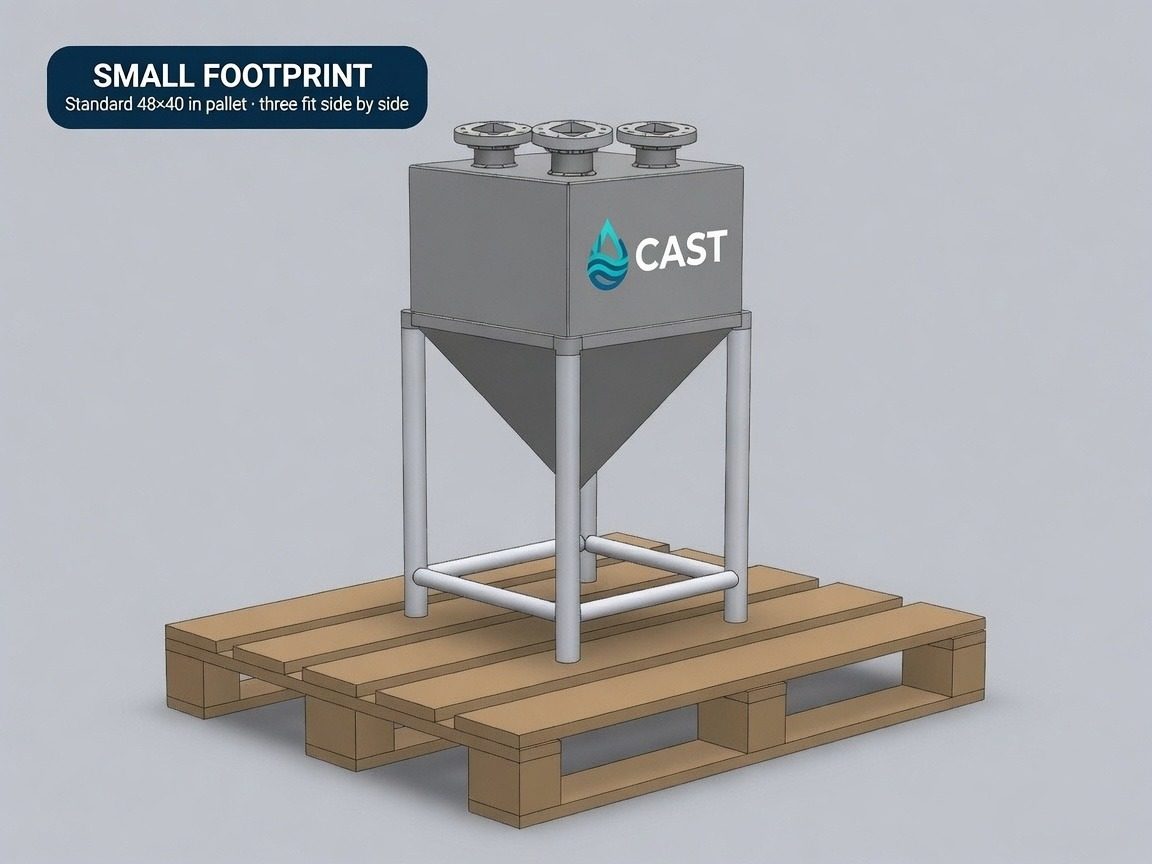
Engineering illustration — single CAST module on metal stand; three modules ship on one 48×40 in pallet

Engineering illustration of one CAST module (stand for clarity). Three modules ship on a standard 48×40 in pallet — size for transport, not how the unit sits in the field. Scale throughput by adding modules in parallel — 200 GPM is per module, not a plant ceiling.
When there is no plant

Mobile Treatment Unit (MTU)

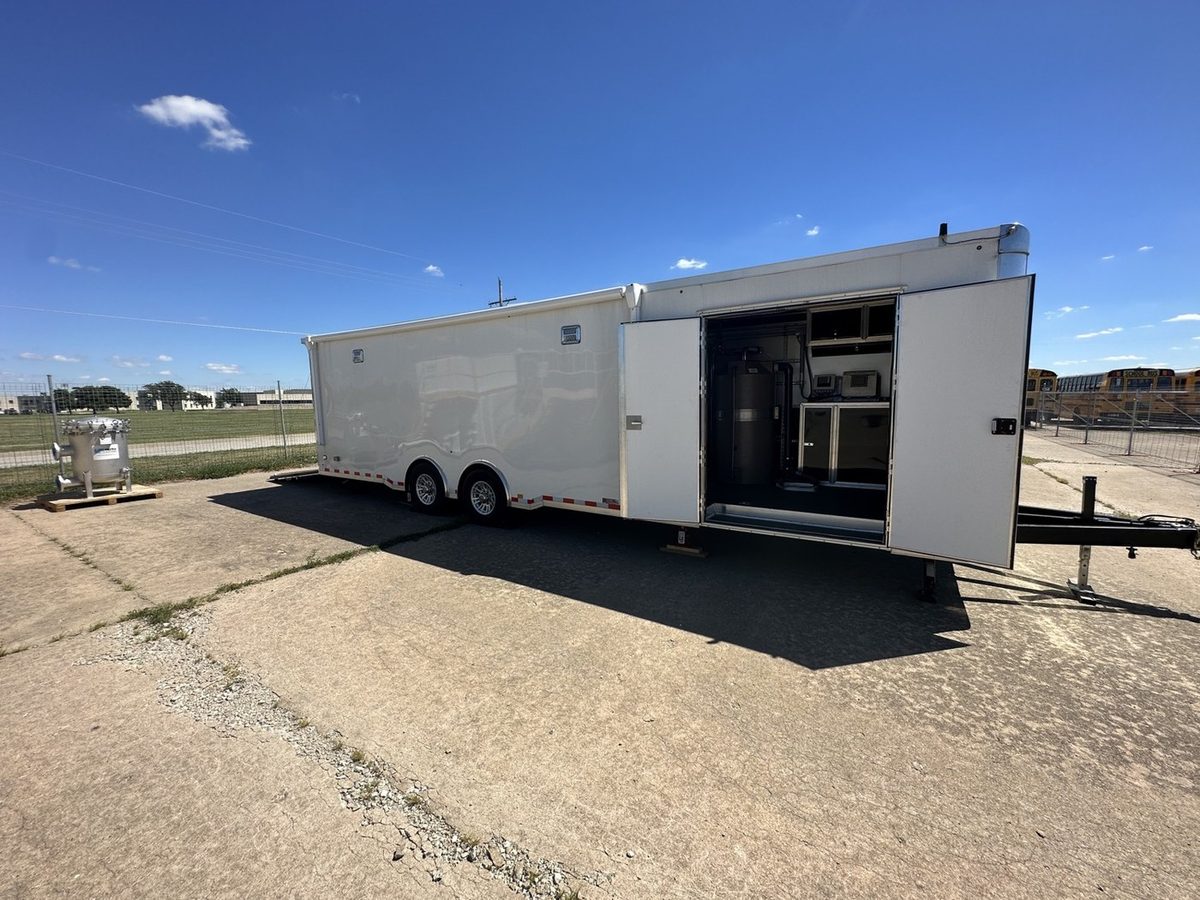
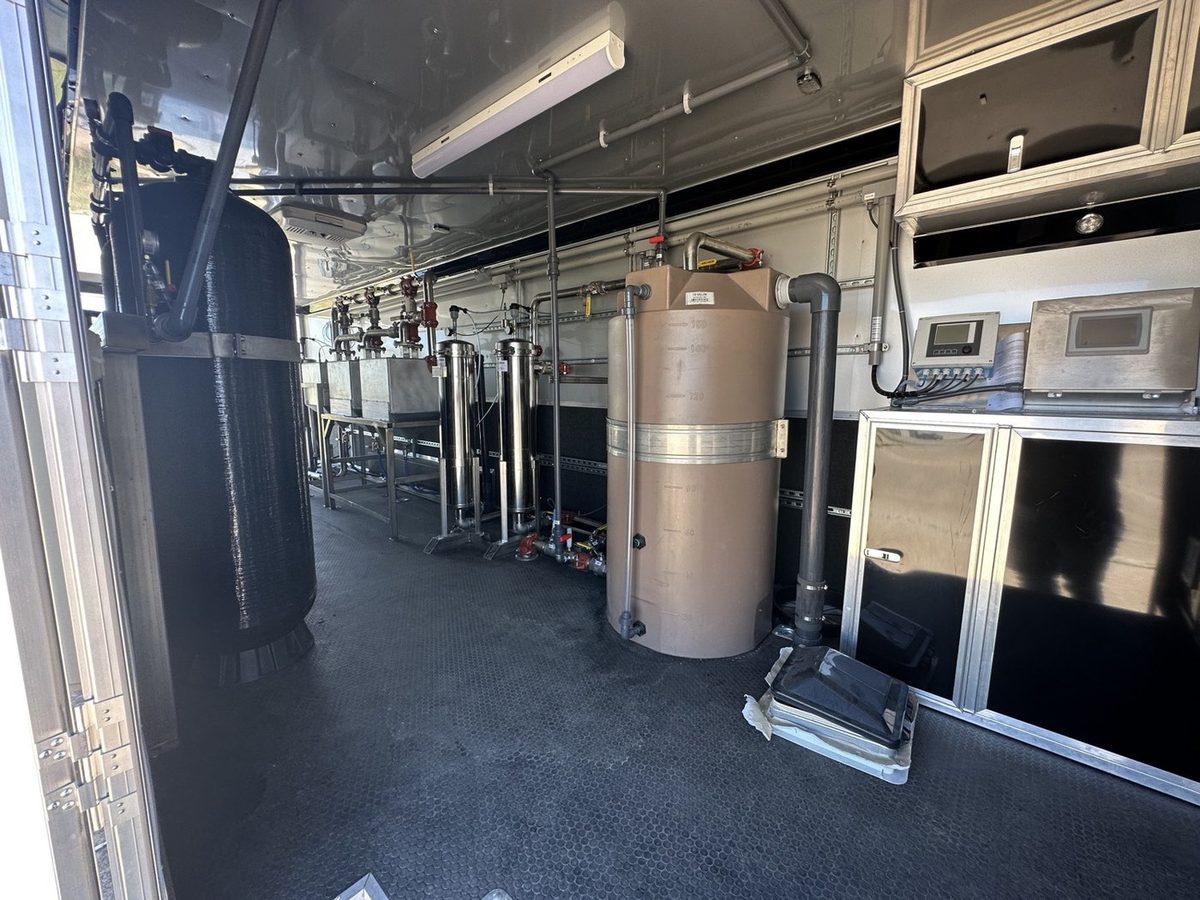
Full mobile train for plumes, ponds, or temporary pads — CAST plus downstream treatment in an enclosed trailer.

Trailer-basedfull system · deploy & connect
Mobile Treatment Unit trailer exterior with equipment doors openInterior of Mobile Treatment Unit showing process vessels and piping

Exterior and interior of the mobile treatment unit. Used when a fixed plant is not available — not the default for in-plant pilots.

Default path remains a paid pilot on your water, then water-as-a-service. MTU is a toolbox option for no-plant sites — not a replacement for “We don't tear out. We tee in.”